The Science

what the research really says

Chinese medicine has mapped the body for over two thousand years. Modern science has spent the last few decades testing what it found. Here is an honest, plain language look at the acupoints people reach for when life gets heavy, and what the studies actually show.

Acupressure is acupuncture without the needles. Same map, same points, same idea, just steady fingertip pressure instead of a fine needle. It is something you can do for yourself, anywhere, with nothing but your own hands.

The map itself is not loose folklore. In 1989 the World Health Organization brought scientists together to standardize a shared language for these points, and today there are 361 classical acupoints recognized in an international standard, each with a precise anatomical location. When a practitioner says PC6 or CV17, doctors across the world know the exact spot on the body being named.

The question is no longer where the points are. It is what happens when you press them.

Below are the points most often turned to for the things people carry every day: a racing mind, low moods, headaches, restless nights, stress that sits in the chest, and a stomach that will not settle. For each one, here is the traditional use and what the research has found so far.

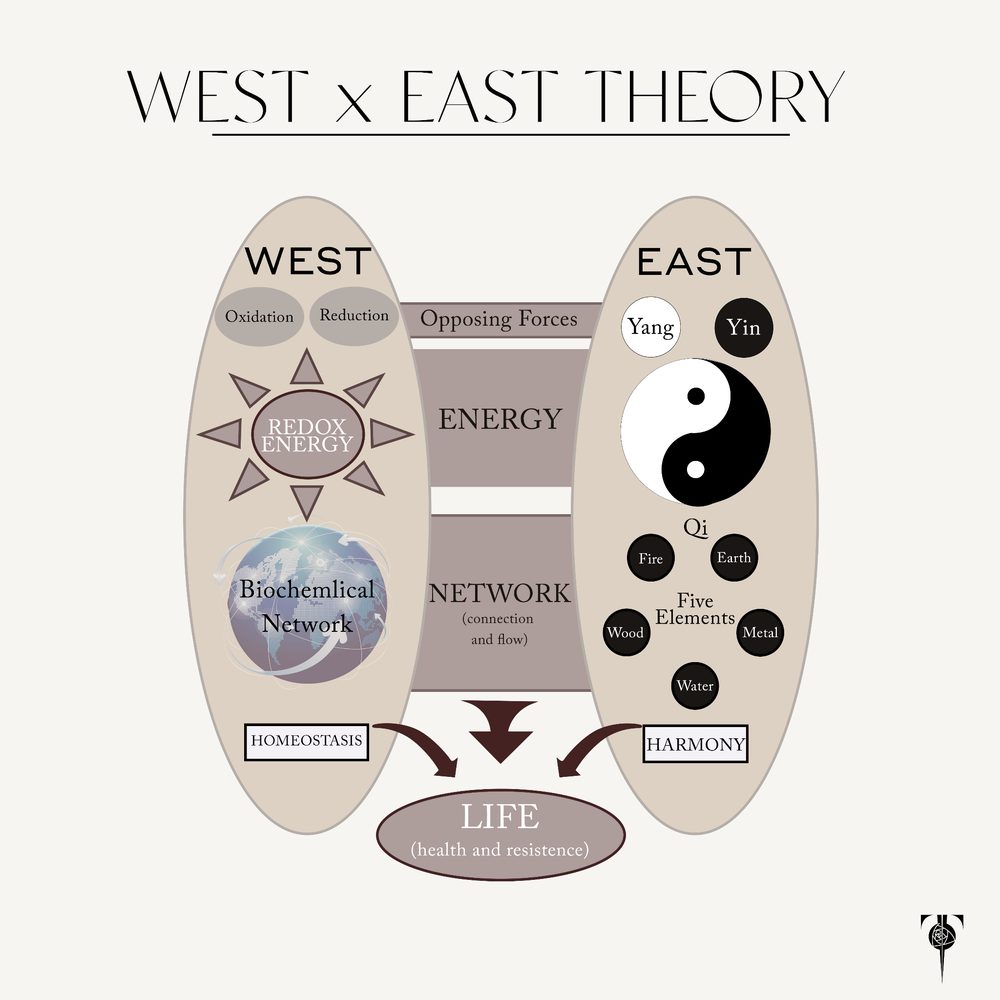
West x East Theory diagram. The Western view of redox energy, biochemical networks, and homeostasis set beside the Eastern view of yin and yang, qi, and the five elements, both pointing toward life, health, and resistance.
West x East Theory • Rose Thorn
How a single point can do anything

what happens under your fingertip

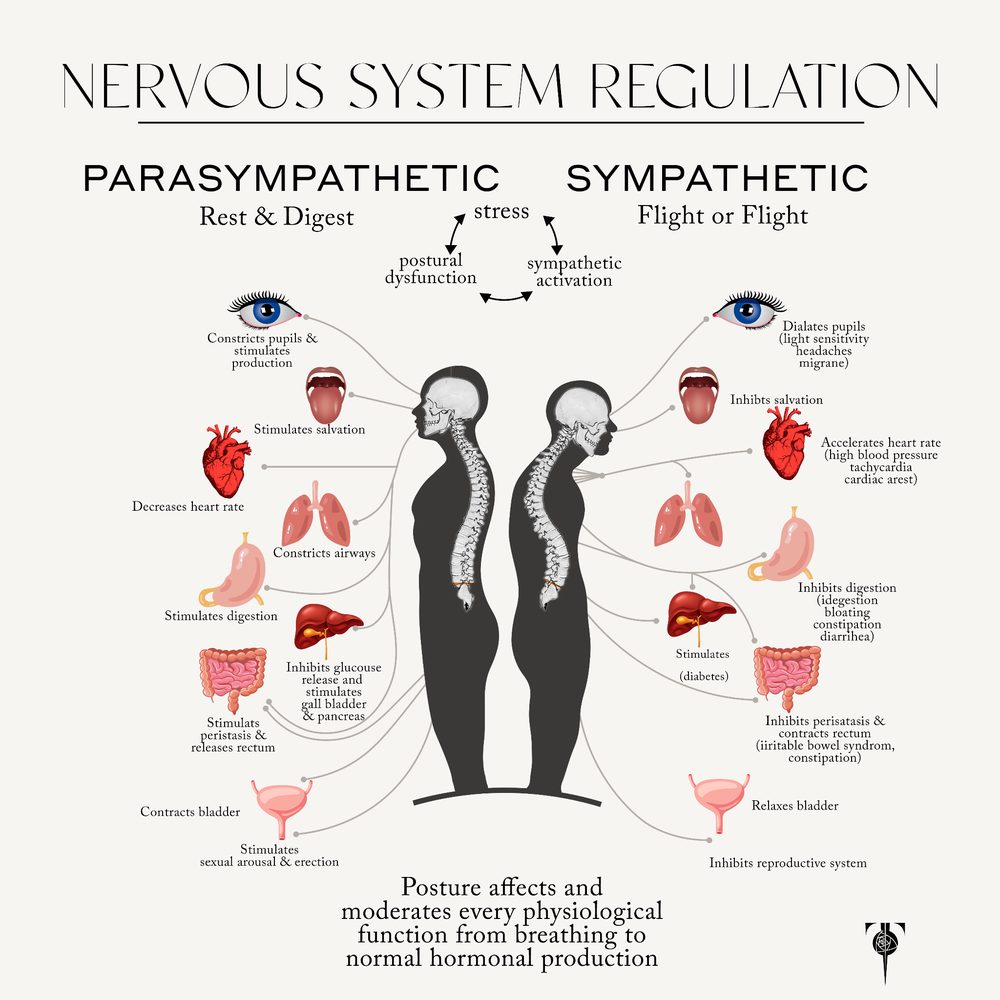
Your nervous system shifts

Steady pressure at certain points is associated with a calming move out of fight or flight and toward the rest and digest state. It is the leading explanation for why acupressure can feel settling.

Your body releases its own relief

Stimulating acupoints has been linked to the release of endorphins and other natural chemicals, the same family of compounds your body uses to dial down pain and lift mood.

Your brain responds

Brain imaging studies show that stimulating acupoints changes activity in regions tied to pain, emotion, and stress. Researchers are still mapping exactly how, but the response is real and measurable.

Nervous System Regulation. How steady pressure at certain points shifts the body out of fight or flight and toward the rest and digest state.
Nervous System • Regulation
The points, by what you are feeling

find the struggle, meet the point

Anxiety

For a racing mind

Yintang • Shenmen (HT7) • Neiguan (PC6)

When anxiety spikes, Chinese medicine reaches for the point between the brows known as Yintang, often called the third eye, alongside Shenmen on the wrist, whose name translates to Spirit Gate. Both are traditionally used to quiet mental chatter and bring a scattered mind back to center.

Reviews of acupressure for anxiety report meaningful drops in self rated tension across many settings, from students before exams to patients waiting for procedures. The gentlest, most accessible of these tools, and among the most studied.

Try it: rest a fingertip between your eyebrows, breathe slow, and let the shoulders drop.
Low mood

For heavy, low days

Baihui (GV20) • Yintang • Taichong (LR3)

For low mood, the classical choices sit at the crown of the head (Baihui, the meeting of a hundred meridians) and on the top of the foot (Taichong), the point traditionally used to move stuck energy and ease the weight of frustration and sadness.

Several reviews have studied acupressure and acupuncture as a gentle support for low mood and emotional wellbeing, often alongside other care. Promising, and a soothing daily ritual in its own right.

Try it: light circular pressure at the crown of the head for a slow count of sixty.

Headaches

For tension headaches

Hegu (LI4) • Fengchi (GB20) • Taiyang

The most famous point for head and neck tension is Hegu, in the web between thumb and forefinger, paired with Fengchi at the base of the skull and Taiyang at the temples. These are the spots fingers find on their own during a long, aching day.

Systematic reviews of acupuncture and hands on therapy for tension type headache, pooling thousands of participants, find them to be valuable options for reducing how often and how hard these headaches hit.

Try it: squeeze the webbing between thumb and finger (skip if pregnant) for slow, firm pulses.

Sleep

For nights you cannot switch off

Shenmen (HT7) • Sanyinjiao (SP6) • ear Shenmen

For sleep, Chinese medicine turns again to Shenmen, the Spirit Gate on the wrist, along with Sanyinjiao on the inner ankle and a calming point on the ear. Together they are the classic wind down combination for a mind that will not quiet at night.

A meta analysis pooling dozens of trials found that acupressure improved overall sleep quality, and studies of ear acupressure report better sleep scores, including falling asleep faster and staying asleep longer.

Try it: press the crease of the inner wrist below the pinky as part of your bedtime ritual.

Stress

For stress that sits in the chest

Shanzhong, the Sea of Tranquility (CV17)

At the center of the chest sits CV17, called the Sea of Tranquility. For centuries it has been the point of choice for a tight chest, shallow breath, and emotions that feel stuck behind the breastbone.

It is one of the points the Noir Thorn pendant is made for. Because the piece takes on and off, you can press it here, or anywhere else that serves you.

Try it: press the center of the breastbone and take three slow breaths into your hand.

Nausea

For a stomach that will not settle

Neiguan (PC6)

Three finger widths up the inner wrist sits PC6, Neiguan. It is the single most studied acupoint in the world, the one behind those wristbands sold for travel and morning sickness.

This is where the evidence is strongest. Cochrane reviews, the gold standard of medical evidence, conclude that stimulating PC6 helps reduce nausea after surgery, and it has been studied for motion sickness, pregnancy, and chemotherapy too. When people ask whether any of this is real, PC6 is the clearest yes.

Try it: press three finger widths below the wrist crease, between the two tendons.

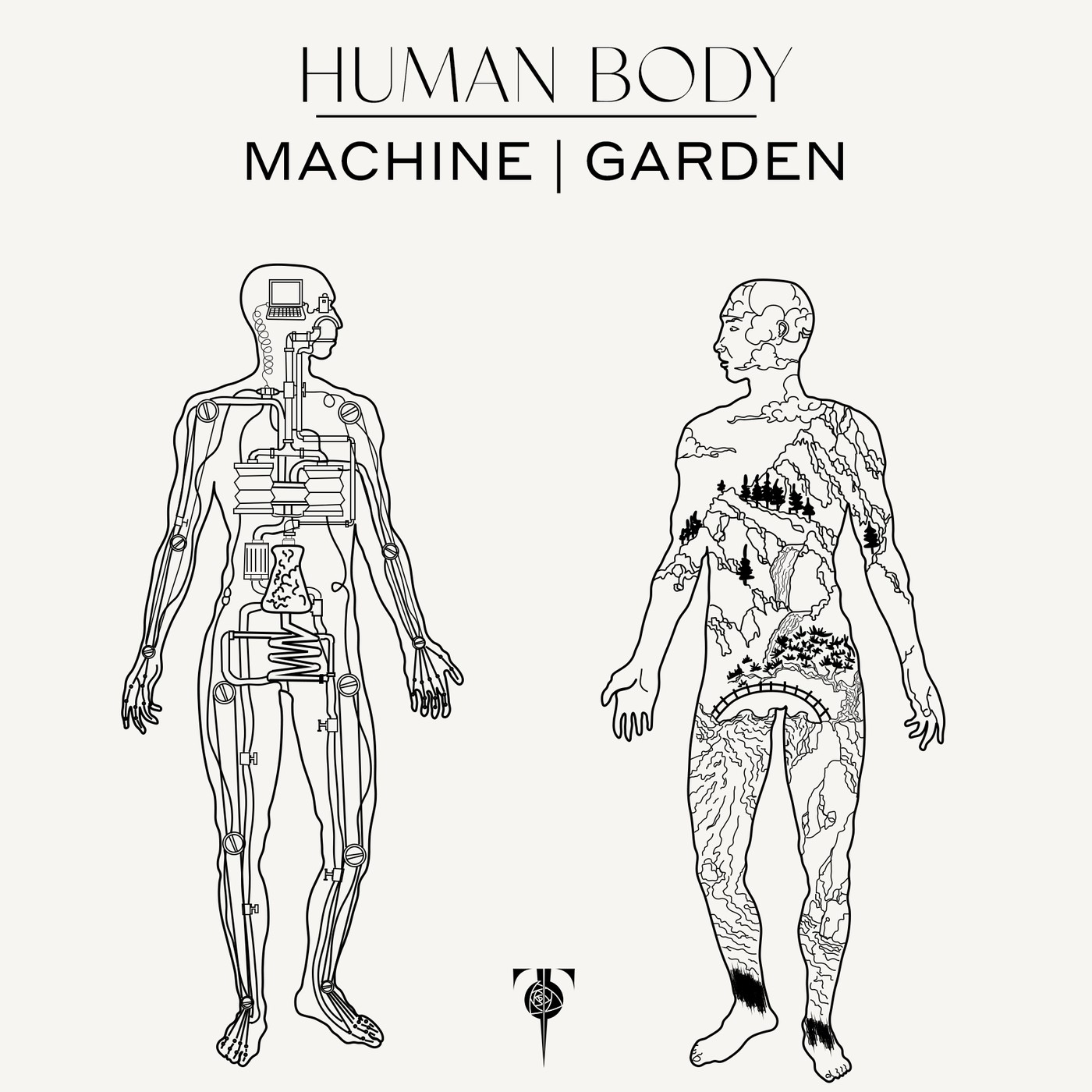
Human Body: Machine and Garden. The mechanistic view of the body as a system of parts set beside the view of the body as a living, growing garden.
Human Body • Machine and Garden
Straight talk

how strong is the evidence, really

We would rather tell you the truth than oversell. Acupressure is not magic and it is not a cure. It is a gentle, low risk practice with a real and growing body of research behind it. Here is the honest lay of the land.

Strongest

Nausea, through PC6. Backed by Cochrane reviews and decades of trials. This one is well established.

Encouraging

Stress, anxiety, sleep, and tension headaches. Many positive studies, with researchers still refining the quality of the evidence.

Still being studied

Exactly how the points work, and whether each point is uniquely specific. Brain imaging shows real effects while the full picture is still being mapped.

From research to ritual

wear the point that matters

The Noir Thorn necklace takes on and off, so one piece of sterling silver lets you press into any of these points, the same points Chinese medicine has trusted for centuries, whenever you need them.

Meet the Meditation Tool
For the curious

references

The research on this page draws on peer reviewed systematic reviews, meta analyses, and the international standard for acupoint locations. Full citations in APA style are below.

  1. Lee, A., Chan, S. K. C., & Fan, L. T. Y. (2015). Stimulation of the wrist acupuncture point PC6 for preventing postoperative nausea and vomiting. Cochrane Database of Systematic Reviews, 2015(11), Article CD003281. https://doi.org/10.1002/14651858.CD003281.pub4
  2. He, T., Zhu, W., Du, S.-Q., Yang, J.-W., Li, F., Yang, B.-F., Shi, G.-X., & Liu, C.-Z. (2015). Neural mechanisms of acupuncture as revealed by fMRI studies. Autonomic Neuroscience, 190, 1–9. https://doi.org/10.1016/j.autneu.2015.03.006
  3. Huang, W., Pach, D., Napadow, V., Park, K., Long, X., Neumann, J., Maeda, Y., Nierhaus, T., Liang, F., & Witt, C. M. (2012). Characterizing acupuncture stimuli using brain imaging with fMRI: A systematic review and meta analysis of the literature. PLoS ONE, 7(4), Article e32960. https://doi.org/10.1371/journal.pone.0032960
  4. Kang, W.-l., Xiao, X.-j., Fan, R., Zhong, D.-l., Li, Y.-x., She, J., Li, J., Feng, Y., & Jin, R.-j. (2023). Acupuncture for tension type headache: A systematic review and meta analysis of randomized controlled trials. Frontiers in Neurology, 13, Article 943495. https://doi.org/10.3389/fneur.2022.943495
  5. Waits, A., Tang, Y.-R., Cheng, H.-M., Tai, C.-J., & Chien, L.-Y. (2018). Acupressure effect on sleep quality: A systematic review and meta analysis. Sleep Medicine Reviews, 37, 24–34. https://doi.org/10.1016/j.smrv.2016.12.004
  6. Wang, Y., Zhang, J., Jin, Y., & Zhang, Q. (2021). Auricular acupressure therapy for patients with cancer with sleep disturbance: A systematic review and meta analysis. Evidence Based Complementary and Alternative Medicine, 2021, Article 3996101. https://doi.org/10.1155/2021/3996101
  7. World Health Organization. (2009). WHO standard acupuncture point locations in the Western Pacific Region. WHO Regional Office for the Western Pacific. https://iris.who.int/handle/10665/353407